Healthcare licensing in the United Arab Emirates is a highly regulated system designed to ensure quality, safety, and compliance across all medical services. The system is governed by different regulatory authorities depending on the emirate, each operating under its own framework and digital platforms.
The main regulatory bodies include:
- Ministry of Health and Prevention (MOHAP) for the Northern Emirates
- Dubai Health Authority (DHA) for the Emirate of Dubai
- Department of Health – Abu Dhabi (DoH) for the Emirate of Abu Dhabi
- Sharjah Health Authority (SHA) for the Emirate of Sharjah
The system covers two main categories:
- Healthcare professional licensing (individuals)
- Healthcare facility licensing (clinics, centers, hospitals, laboratories)
1. Renewal of Healthcare Professional Licenses
Healthcare professionals in the UAE must renew their licenses regularly in order to continue practicing legally. This applies to physicians, nurses, technicians, pharmacists, and other allied health professionals.
General Renewal Requirements
Typically, the following conditions must be met:
- A valid or recently expired professional license
- No active disciplinary actions or regulatory violations
- Completion of Continuing Medical Education (CME/CPD) requirements
- Valid malpractice insurance (in most cases)
- A valid employment contract or active affiliation with a licensed facility
- Successful completion of any required assessments depending on the specialty
2. Renewal of Healthcare Facility Licenses
This category includes clinics, medical centers, laboratories, and hospitals.
Key Requirements
- A valid and updated trade license
- An existing healthcare facility license
- Full compliance with health and safety regulations
- Licensed medical staff according to facility activities
- Contracts for medical waste management and sterilization services
- Compliance with Civil Defense and safety standards
- No outstanding violations or regulatory penalties
In some cases, additional requirements may include:
- On-site inspection reports
- Quality accreditation certificates (if applicable)
- Updated facility layouts or signage approvals
3. Renewal Process (Step-by-Step)
Although procedures vary between authorities, the general workflow remains similar across the UAE.
The process begins by logging into the relevant official healthcare licensing platform and selecting the “License Renewal” service. Applicants are then required to update their information, upload supporting documents, and complete the required payments online.
The regulatory authority reviews the application and verifies compliance with all requirements. If no deficiencies are identified, the renewed license is issued electronically and made available for download.
4. License Validity Period
License validity differs depending on the emirate and license type:
- Some emirates require annual renewal, particularly for healthcare facilities
- Dubai and Abu Dhabi may issue licenses valid for one to three years for certain categories
- Healthcare professionals typically renew their licenses annually or biannually depending on the authority
Applications are generally allowed between 30 to 90 days before expiration, depending on the regulatory body.
5. Fees and Costs
Fees vary significantly based on emirate, license type, and facility size.
In general, costs may include:
- Application renewal fees
- Annual or multi-year licensing fees
- Professional licensing fees for healthcare workers
- Inspection or accreditation fees (for facilities, if applicable)
- Late renewal penalties
Dubai and Abu Dhabi typically offer more flexible licensing durations, while Northern Emirates follow a more standardized annual renewal model.
6. Late Renewal Penalties
Failure to renew a healthcare license on time may result in:
- Monthly financial penalties or percentage-based fines
- Temporary suspension of the license
- Full suspension of healthcare activities
- Permanent cancellation of the license after a defined grace period
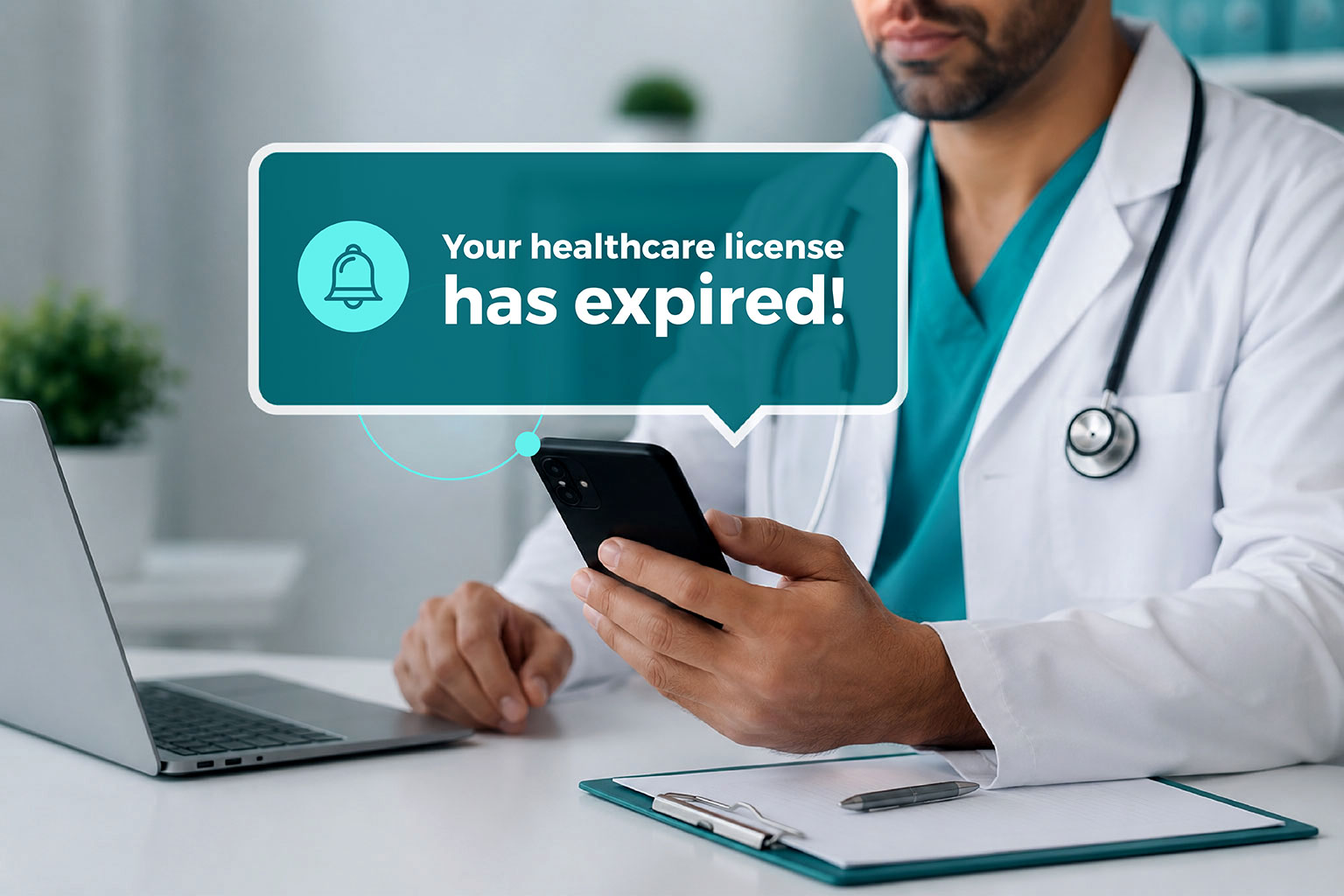
All regulatory authorities enforce strict compliance, and no healthcare practice is permitted without a valid license.
7. Official Digital Platforms
All renewal processes are conducted exclusively through official digital platforms, including:
- Ministry of Health and Prevention (MOHAP) platform
- Dubai Health Authority (DHA) “Sheryan” system
- Department of Health – Abu Dhabi “TAMM” platform
- Sharjah Health Authority (SHA) eServices platform
All systems require UAE PASS authentication for access.
8. Common Reasons for Renewal Delays or Rejection
The most common issues include:
- Insufficient CME/CPD credits
- Outstanding fines or violations
- Expired trade license (for facilities)
- Incomplete or incorrect documentation
- Outdated malpractice insurance
- Failure to pass facility inspections
9. Key Recommendations for Successful Renewal
To ensure a smooth renewal process:
- Begin the renewal process 60–90 days before expiry
- Keep all professional data and records updated
- Complete CME/CPD requirements in advance
- Clear any outstanding violations or fines
- Maintain valid insurance coverage
- Keep digital copies of all required documents
In Conclusion ,Healthcare licensing in the UAE is built on continuous compliance rather than one-time approval. Renewal is a critical regulatory requirement that ensures ongoing safety, quality, and professionalism across the healthcare sector.